
what Is a gecko
In the dark of night, skinny gnome-like lizards with shiny bulging eyes skitter across the trunk of a rainforest tree, the wall of a beach resort, or a flaking granite boulder in the desert, stalking moths, beetles, spiders and other small prey. These are geckos, the second largest group of lizards in the world. More than 900 species of geckos, 25% of all lizards, occur in tropical and subtropical deserts and forests around the world.
tiny tigers
|
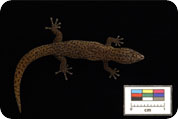
Monito Geckos (Sphaerodactylus parthenopion) stalking termites, ants and other minute insects in the leaf litter in the Caribbean are the smallest reptiles in the world. An adult is only 1.3 in (34 mm) long and weighs only 1/4000 oz. (0.12 g). All geckos are small to medium size lizards. The largest species, the rather short-tailed New Caledonian Giant Gecko (Rhacodactylus leachianus), is only 15.7 inches (40 cm) in total length (TL) and may weigh 1.5 pounds (600 g).
|
night vision goggles
|
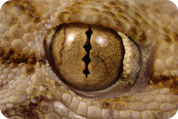
The huge globe-like eyes and vertically slit pupils of nocturnal geckos are their most startling feature. The vertically slit pupil opens wide in the dark to allow the maximum amount of light to enter, and closes to a tiny slit by day. Their bulging eyes have a fixed transparent covering, the spectacle, rather than moveable eyelids. Geckos use their long sticky tongues to wipe these spectacles clean. The relatively few diurnal geckos have round pupils.
|
Better than Spiderman
|
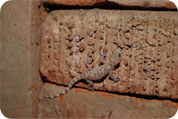
Geckos are famous for their death-defying ability to stroll across walls, ceilings and even slick glass. Clinging toepads, expanded felt-like pads under the toes, provide the secret. These pads are covered with rows of thin overlapping plates called lamellae. Each lamella is densely covered with microscopic hairlike projections. As these hairs contact a surface, friction supplies adhesive force. The strength of each bond is minuscule, but each toepad may have a million clinging hairs, adding up to more than enough to support the lizard, even upside down on a smooth ceiling.
|
serenades in the night
|
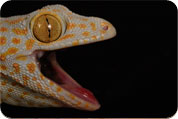
Throughout the tropics and sub-tropics, the night is punctuated by the squeaks, chirps, grunts or even growls of geckos defending their territories or raising an alarm. Geckos are the most vocal of lizards. Like the Blue Jay, named after its noisy song, the harsh calls of the Tokay Gecko, transcribed as to-kay or gek-ko, named themselves and the rest of their family.
|
two by two
|
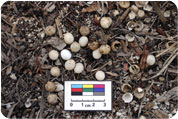
Most geckos lay clutches of two eggs with hard, calcareous (containing calcium carbonate, calcium, or lime) shells (single eggs in some of the tiny dwarf geckos), although a few species from New Zealand give live birth. The durability of the eggs and their resistance to dehydration may be an important factor in allowing geckos to colonize new islands A number of geckos, including three species from Hawaii, are all female, parthenogenic species that lay fertile eggs without mating with a male.
|